What's the difference between structural and interior demolition?
This question comes up a lot, and it's where folks often get a bit mixed up. Interior demolition, which we actually do quite a bit of, means taking out stuff *inside* your place without messing with the main structure. Picture knocking down a wall that isn't load-bearing to open up a kitchen, ripping out old cabinets, or gutting a bathroom. You're changing the inside, sure, but the house itself? It's still standing, still totally sound.
Structural demolition, on the other hand, means you're bringing down the whole thing. Or at least a big, load-bearing chunk of it. We're talking about tearing down an entire house, a detached garage, an old shed, or even a major addition that's really part of the building's core. When you call us at Midway Demolition for a structural job, our plan is to take down the actual building, not just its insides. It's a much bigger project, with different permits, equipment, and, let's be honest, a lot more safety considerations.
Do I really need a permit for structural demolition in Pensacola?
Absolutely, 100%, yes. You simply cannot, under any circumstances, just decide to knock down a building in Pensacola without getting a permit first. The city and county have these strict rules for really good reasons – safety, environmental impact, making sure utilities are disconnected properly, and just generally doing things by the book. Trying to skip this step? That's a recipe for disaster. You'll end up with huge fines, stop-work orders, and you'll still have to get the permit anyway, probably with a bunch of extra headaches. Any demolition contractor worth their salt, like us, won't even start talking about swinging a hammer until those permits are in hand. It's truly the first thing we'll discuss.
How long does a typical house demolition take?
That's a tough one to give a single, easy answer to, because it really depends on a few things. Is it a small, single-story ranch house or a multi-story historic home in East Hill? Does it have a lot of concrete, like a big slab foundation or maybe even a pool? Are there trees super close by that need protecting? Generally speaking, once we've got the permits and the utilities are disconnected, the actual physical demolition of an average-sized residential structure in Pensacola can take anywhere from a few days to a week. Then, of course, you've got the debris removal, site grading, and making sure everything's clean. All in all, from start to finish, you're usually looking at a couple of weeks, sometimes more for larger or more complex projects. We always give you a clear timeline upfront, by the way.
What happens to all the debris? Where does it go?
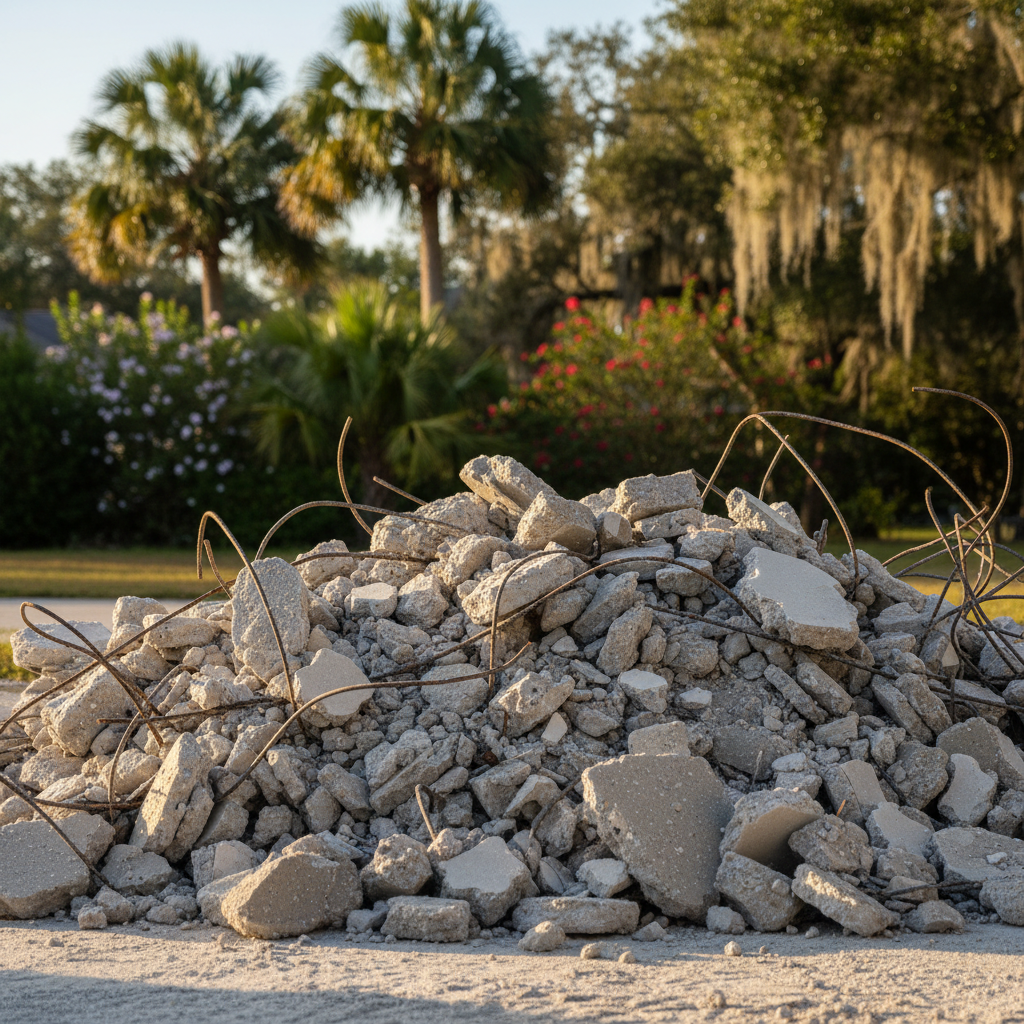
We don't just push it into a pile and leave it, believe me. Debris management is a huge part of structural demolition. First, we try to separate and recycle as much as we possibly can. Things like concrete, metal, and sometimes even wood can often be kept out of landfills. It's good for the environment, and sometimes it can even save you a little money on disposal fees. The rest, the stuff that can't be recycled or reused, gets loaded into specialized containers and hauled off to approved landfills. We're super careful about site cleanup; you won't be left with a mess. Our goal is to leave you with a clean, level pad, ready for whatever you've got planned next.
What about utilities? Do I need to disconnect them myself?
No, you absolutely should not try to disconnect them yourself. That's a job for the pros, and it's a critical safety step. Before any demolition starts, all utilities – electricity, gas, water, sewer, and communication lines – must be safely disconnected and capped off by the actual utility companies. This isn't just about flipping a switch; it means physically cutting the lines at the source and making sure there's no live power or gas flowing to the structure. We coordinate with you and the utility providers to ensure this is done correctly and safely before our crew even steps foot on site with equipment. It's a non-negotiable part of the whole process.
Will my property be damaged during the demolition?
Our goal is to demolish only what needs to be demolished, and nothing else. We take every single precaution to protect your remaining property, any neighboring properties, and any landscaping you want to keep. This includes things like setting up temporary fencing, using dust suppression techniques, and carefully planning the demolition sequence. For instance, if you've got a beautiful old oak tree near the structure, we'll make sure it's protected. Sometimes, with older homes, especially those built on sandy Pensacola soil, there can be vibrations, but we use methods to minimize the impact. We're insured, of course, but honestly, prevention is always our first priority. We walk through all these considerations with you during the initial site visit.
Can I save any materials from the demolition?
Sometimes, yes! If you've got specific items you want to salvage – maybe some antique doors, unique light fixtures, or even certain types of wood – just let us know upfront. We can often build a salvage phase right into the project plan. It takes a little more time and careful handling, but if it's important to you, we'll do our best to make it happen. Just remember, the more you want to salvage, the more labor-intensive it becomes, and that can affect the overall cost and timeline. But hey, it's your property, and if there's something you value, we'll work with you to try and save it before the heavy equipment comes in.